SYNOPSIS
"Sandy is an artist who has fallen out of love with art but more specifically, her own.
Steve is the retired local policeman who has recently discovered art having fallen out of love with life.
When Sandy returns to her Saddleworth roots, she has no plans other than to get some respite from her fast-paced life. To make space and certainly not to make connections.
But a slow-paced life can sometimes be just as challenging. Because when you slow it down, the blurs are soon replaced with the sharply focussed reality of the life that’s been passing you by.
In returning to her roots, Sandy discovers hiding within the blurs, a sardonic, eccentric, but deeply private man who does not appreciate what he has to offer to the world and her. And in stumbling across each other they also rediscover two things we all need: a passion and a purpose.
‘The Saddleworth Constable’ is a simple, lighthearted story about rediscovering the life you need, the love you deserve and the home you never left ... and leaving well alone which county you’re in. Oh, and cheese and onion crisps.”
Approximate running time: approx 50 minutes act 1 and 55 minutes act 2.
Setting: Present day, Saddleworth.
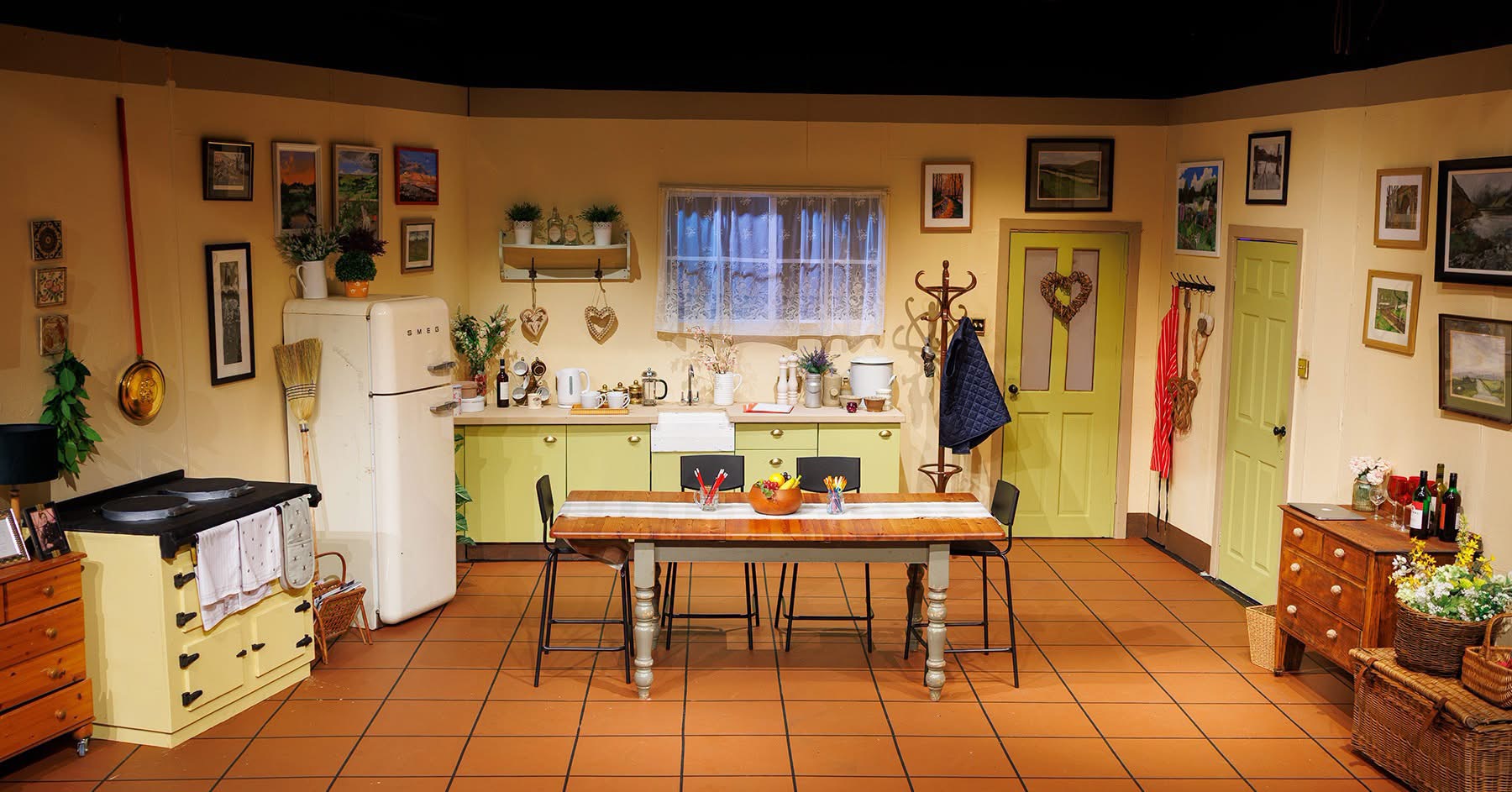
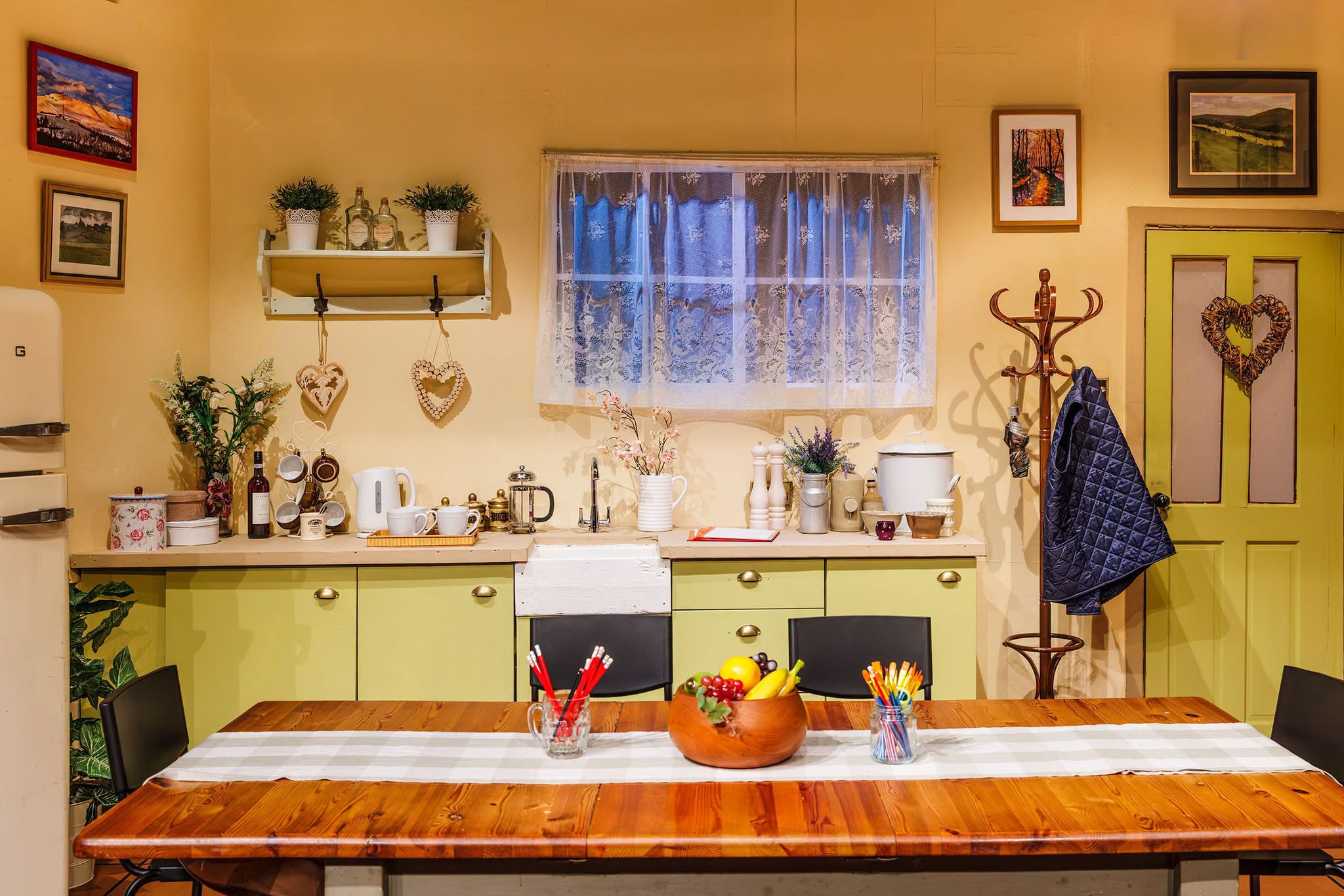
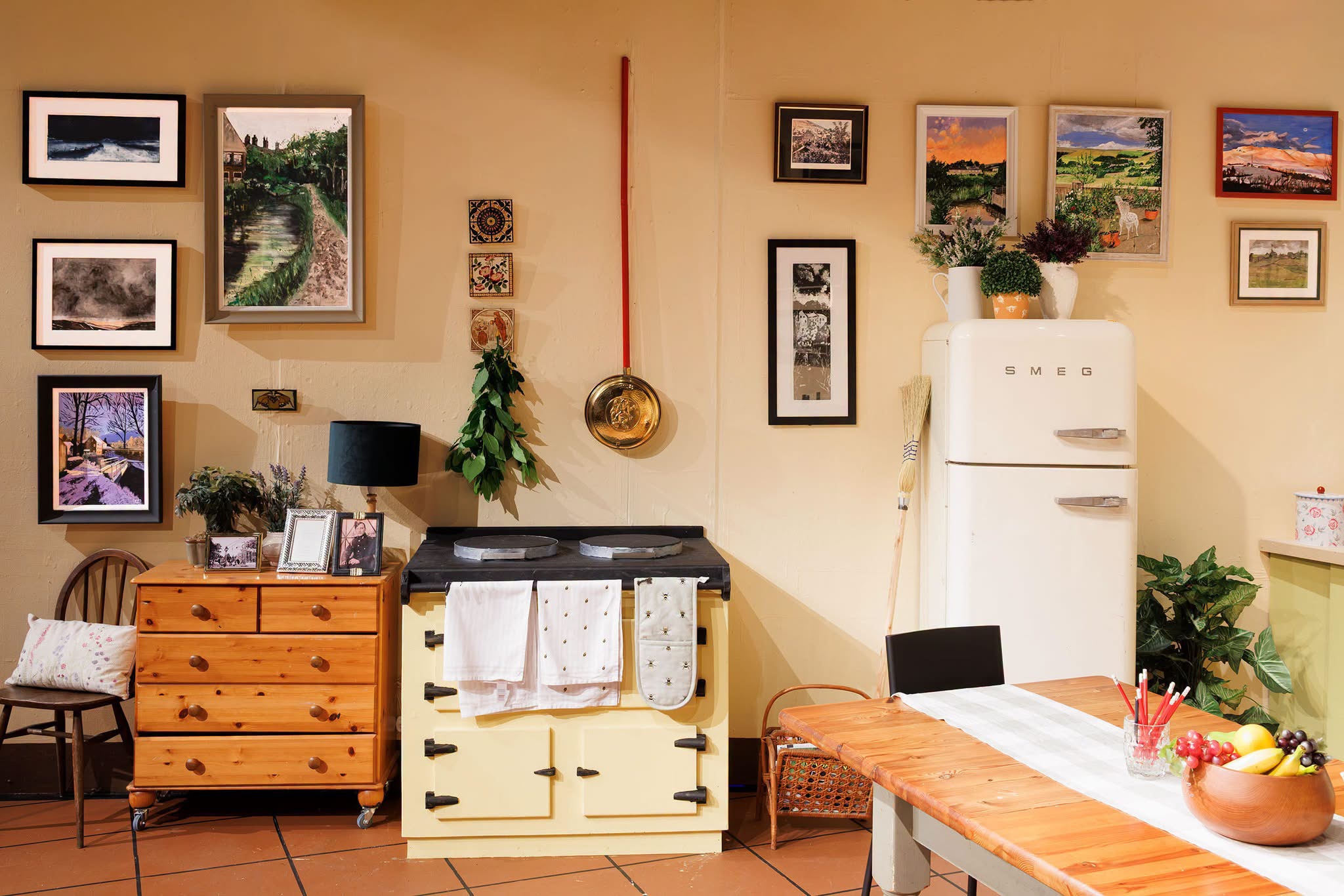
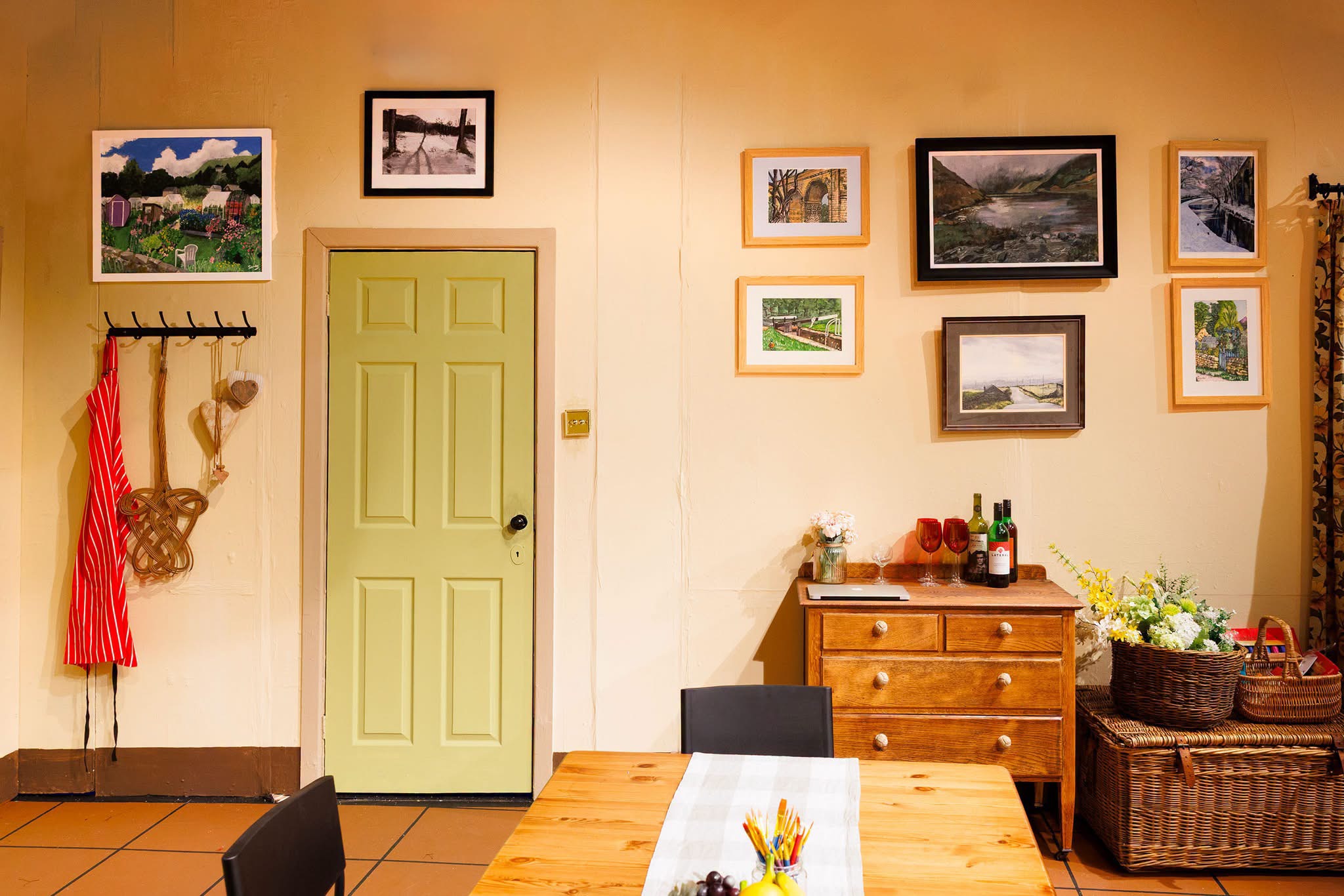
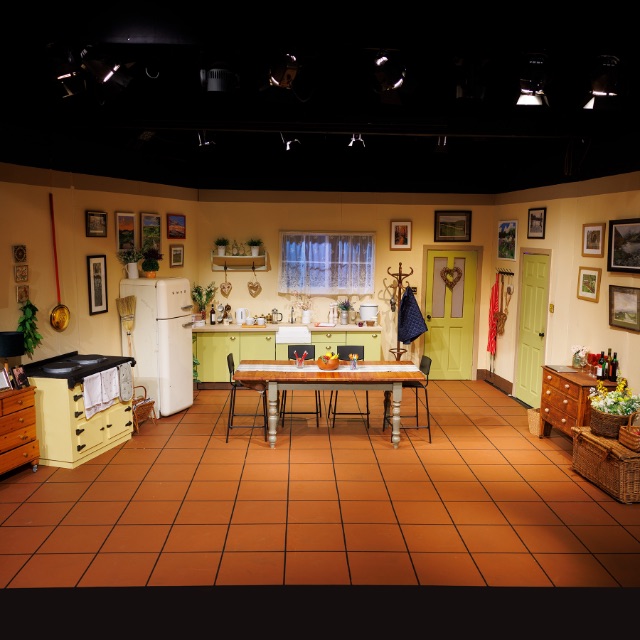
Stage set for the 2026 production at Millgate Arts Centre
To find out more about this play, use the 'Contact' page.
Cast: 1M, 5F. Playing ages are very flexible. Accents all local/northern.
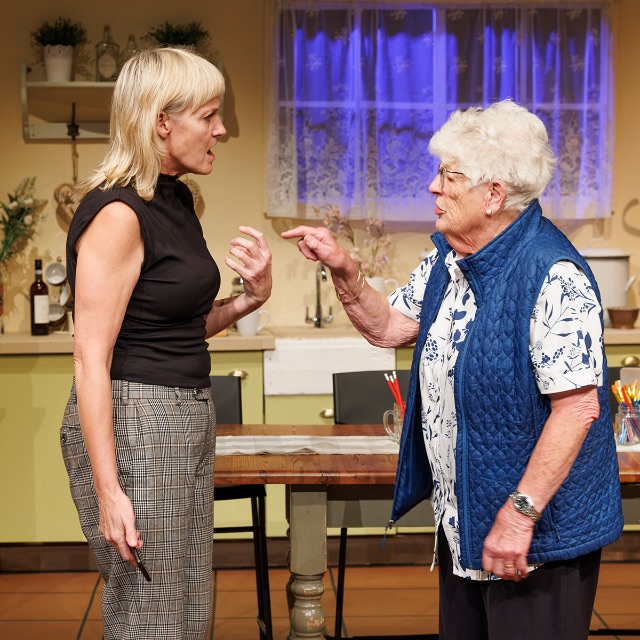
Sandy: 50’s. Well spoken with more than a nod to her roots. Born in Saddleworth but rarely returns. Anne’s daughter. An art expert and previously a successful artist. Now living in Paris. Has had quite a public profile but it became too much and she avoids the public and the limelight. Consequently, protects her privacy and can be guarded which colours her character. Strong, intelligent, business like, sharp, good humoured when revealed. A loner and difficult to get to know. Not looking for love but warms to Steve as the plot develops and opens up to him.
Steve: 50’s. Retired local policeman. Straight talking, sarcastic, sardonic but good humoured. Immersed in his roots. Close to Anne and her friend of many years. He is a loner, intensely private and has recently joined the local art group. As with Sandy, he is difficult to get to know but he opens up to her. They are very different and yet have a synergy. Attracted from the off to her which develops with the story.
Anne: 70’s. Sandy’s mother. Retired, warm, friendly, open, but strong-willed and vocal when required. Close to Steve whom she has introduced to painting and brought into the art group which she runs. Has had a difficult relationship over the years with her daughter, but has been supportive and positive towards her. Whatever history they did have is not explored within the plot but alluded to.
Rachel/Sharon/Karen: 30’s/50’s. All three women are friends of Anne and Steve and members of the art group. Larger than life characters, full of fun and humour. They are protective of Steve and enjoy having fun at his expense and each others! All are equal in role size and collectively feature together in both acts.
Staging: Ostensibly, one set. A large kitchen (dated) fitted out as such in a rambling, old country house. The premiere used two entrances (an internal and an external door). Large table dominates the centre but the space needs to be able to be used around it. At times it is used for the art group so requires the space for them and four stools around the table. Two other scenes: an art exhibition which is simply an easel set away from the main playing area/picked out using lighting. The other is a pub, which is just a table and two chairs. Maybe one area D/L and the other D/R. For the premiere they were both played D/C/S. There are no special requirements for lighting (other than zoning the specific playing areas) and minimal SFX (doorbell and mobile phone) NB: a prop’s list is provided in the script.
Adaptation: This play was written to make it easily adapted for any locale. There are basically three aspects of the script which need to be looked at to make the play applicable to another place: Title, place names and terminology. Regarding the title, ‘The Saddleworth Constable’ might become (for example) ‘The Cotswolds Constable.’ In programmes and publicity, it would therefore be referenced as: ‘The Cotswold Constable’ (from the original play ‘The Saddleworth Constable’) by Martin Paul Roche. In respect of place names a number of instances will need to be adjusted to reflect the changed locale. For terminology, colloquial terms may need to be revisited. All I would say is that the more locally-specific they are, the greater the audience will associate with them. The suggested adaptations are the only changes which are permitted. The dialogue and characters must not be altered, added to or edited in any other way.
NB: There is gratuitous innuendo in A1S2 for which I make no apologies!
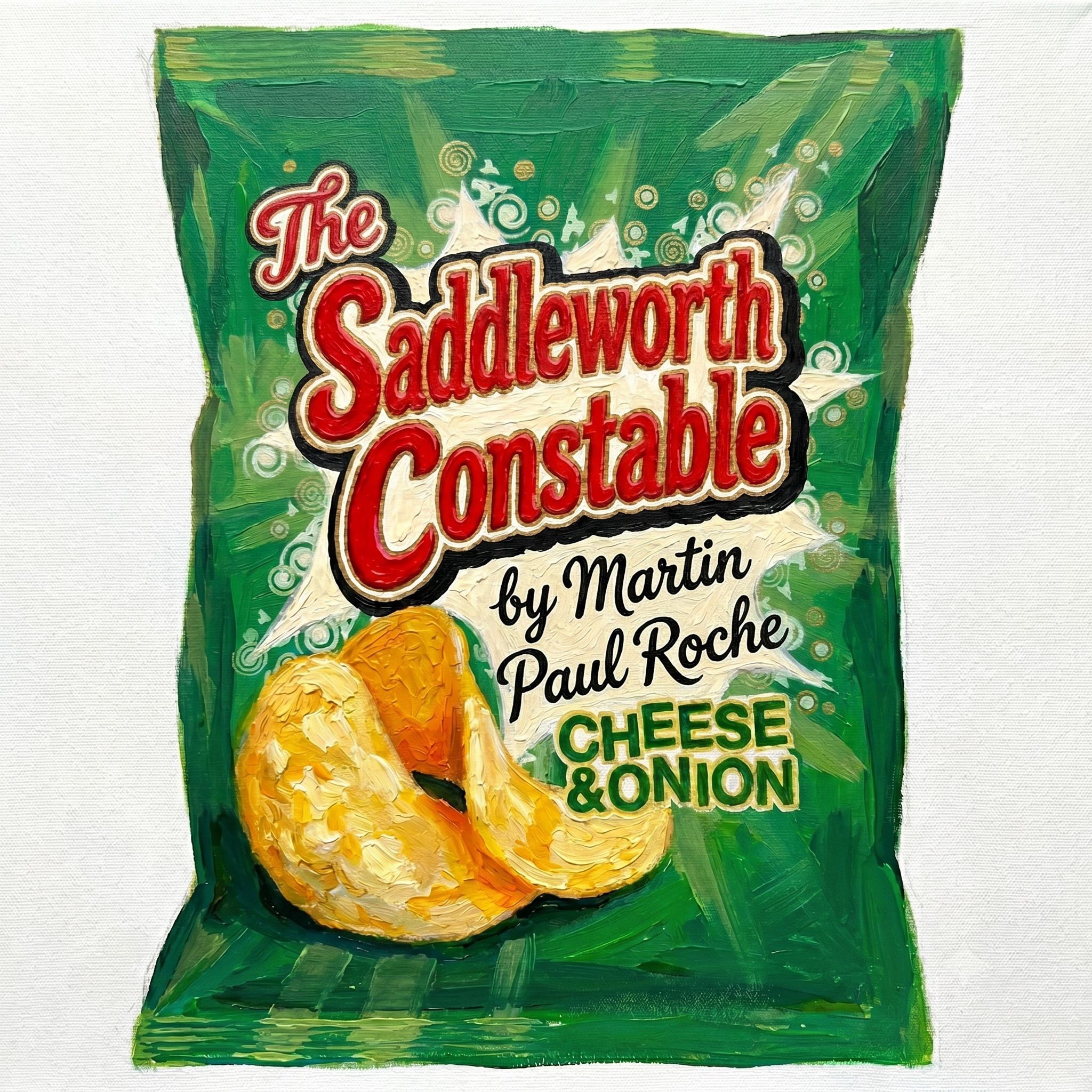
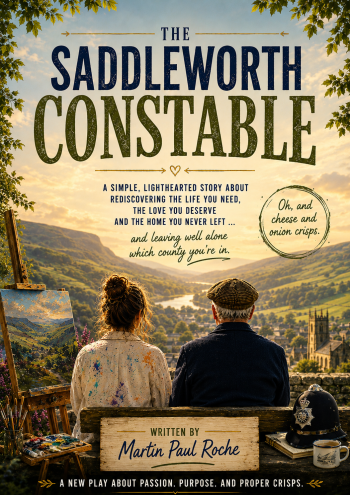
Artwork used for the premiere production in 2026
Gallery
Awards
2026 Review: “A heartwarming and hilarious comedy delivered with aplomb and professionalism”